
Nara Day Trip Guide: Deer, Temples, and What to Know (2026)
Nara was Japan's first permanent capital. Its deer are famous; its temples are extraordinary. Here is how to visit properly.
Nara was Japan's first permanent capital, established in 710 AD. Before Kyoto, before Tokyo, Nara was where the imperial court settled and where Japan's earliest Buddhist culture flourished. Today it is a manageable day trip from Osaka or Kyoto, famous for its free-roaming deer and home to some of Japan's oldest and largest temple structures.
Some links in this article are affiliate links. If you book through them, The Standard Japan may earn a commission at no additional cost to you.
Getting There
From Osaka — Kintetsu Nara Line from Osaka-Namba to Kintetsu-Nara: approximately 40 minutes. This is the fastest option and deposits you closest to the park.
From Kyoto — Kintetsu Limited Express from Kyoto to Kintetsu-Nara: approximately 35 minutes. JR is slightly slower.
From Tokyo — Shinkansen to Kyoto or Osaka, then connection to Nara. Not a practical standalone day trip from Tokyo; combine with Osaka/Kyoto.
The Deer
Approximately 1,200 sika deer roam freely in Nara Park. They are considered sacred messengers of the gods according to Shinto belief, and they have been protected for over 1,300 years. They are tame — aggressively so.
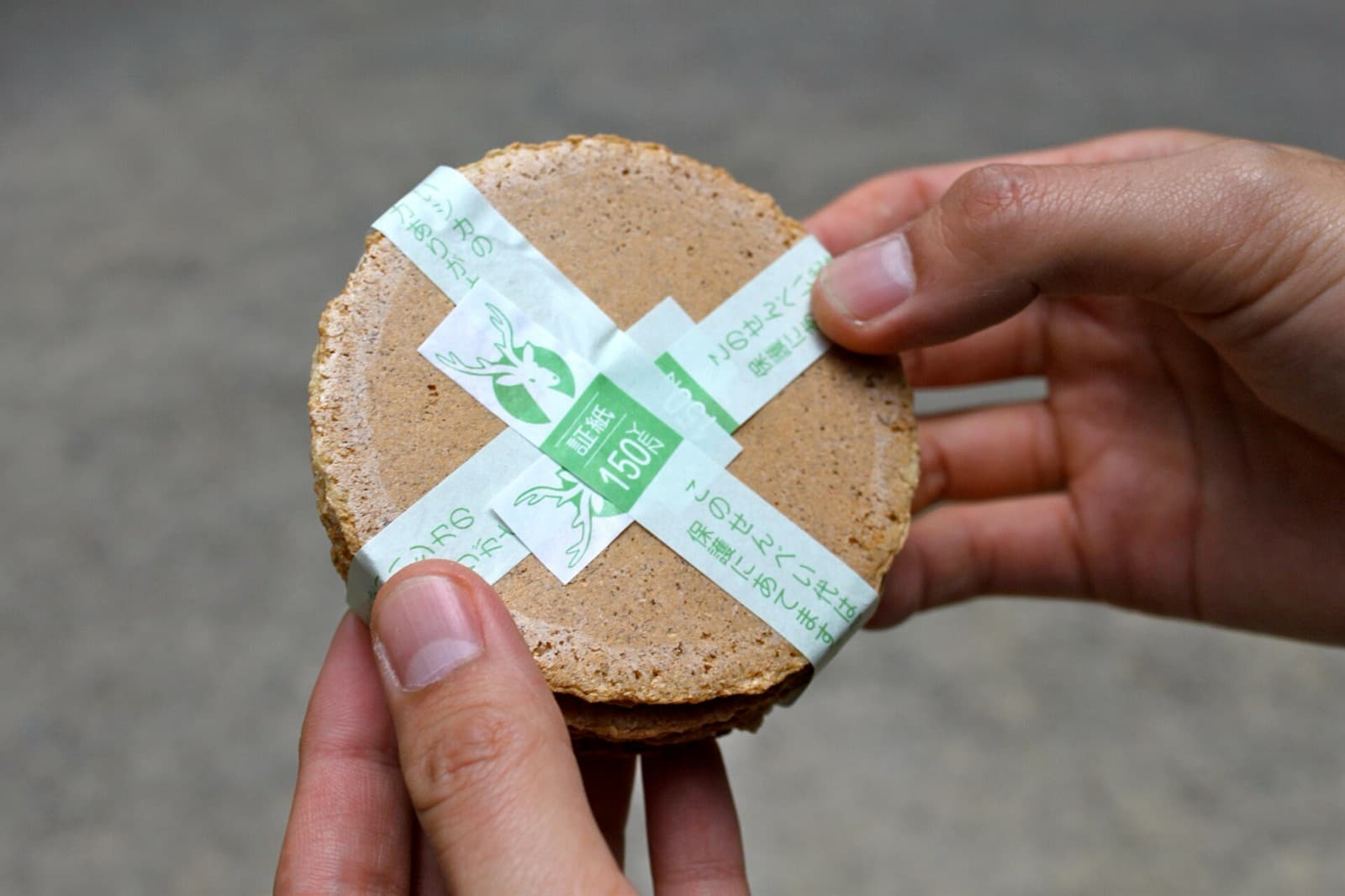
Deer senbei (special crackers sold by vendors) provoke a Pavlovian response in deer who have learned the sound of crackers being unwrapped. Buying crackers means being surrounded immediately. Bow to a deer and it may bow back.
Notes: Deer will head-butt bags, pockets, and visitors who smell of food. Protect your belongings. Small children need supervision. Despite the aggressive snack-seeking, deer bites are rare.
What to See
Todai-ji Temple
Todai-ji (東大寺) contains Japan's largest bronze statue of Buddha — a 15-meter seated figure cast in 746 AD. The temple hall that houses it (Daibutsuden) is the world's largest wooden structure, though it is actually only two-thirds the size of the original.
The Great Buddha (Daibutsu) is one of Japan's most extraordinary objects. Stand before it and the scale is disorienting — the figure's hand alone is the size of a person.
A pillar inside the Daibutsuden has a hole at the base the same diameter as the Buddha's nostril (37cm). Passing through it is said to bring enlightenment. There is usually a queue.
Entrance fee: ¥600 for adults.
Kasuga Grand Shrine
Kasuga Taisha (春日大社) is Nara's most important Shinto shrine — the headquarters of the Kasuga religion and a UNESCO World Heritage Site. The approach through ancient cedar forest is lined with hundreds of stone lanterns; the shrine itself has over 2,000 hanging bronze lanterns that are lit twice yearly (Setsubun in February and Obon in August).
The surrounding Kasugayama Primeval Forest is one of the oldest protected forests in Japan — 1,300 years without logging.
Kofuku-ji Temple
Kofuku-ji (興福寺) stands at the edge of Nara Park with its five-story pagoda. The pagoda, first built in 730 AD and reconstructed multiple times, is one of Japan's most iconic — and appears on the ¥50 coin.
The temple's Eastern Golden Hall (Toko-Kondo) and the National Treasure Museum contain extraordinary Buddhist sculpture.
Yoshikien and Isuien Gardens
Two adjacent traditional Japanese gardens near Todai-ji are often overlooked by visitors rushing to the deer and temples. Isuien (依水園) uses the roofline of Todai-ji and the hills of Wakakusa as borrowed scenery — one of the finest garden compositions in Japan. Entry is modest.
What to Eat
Kakinoha-zushi — Sushi wrapped in persimmon leaves; Nara's most distinctive local food. The persimmon leaf both preserves the fish and imparts a subtle flavor. Available at restaurants and take-away throughout the city.
Miwa somen — Thin wheat noodles from the Miwa area near Nara; one of Japan's oldest noodle traditions. Eaten cold in summer and in hot dashi in cooler months.
Kuzumochi and kuzu dishes — Nara's Yoshino area is famous for kuzu (arrowroot starch) sweets, used in traditional confections and cuisine throughout the city.
Nara pickles (narazuke) — Vegetables pickled in sake lees; a Nara specialty that has been produced since the Nara period. Strong flavor; excellent with rice.
Practical Notes
How long to stay — The main sights (Todai-ji, Kasuga Taisha, deer park, one or two gardens) comfortably fill a day. The park area is more pleasant in the afternoon when morning crowds thin.
Mt. Wakakusa — The grassy hillside overlooking Nara Park; climbable in 30 minutes with views across the city and deer grazing on the slope. Less visited than the main temples.
Naramachi — Nara's preserved merchant district south of Kofuku-ji; narrow streets of machiya townhouses converted to restaurants, cafes, and craft shops. Good for afternoon wandering.
Crowds — Nara is busy on weekends and Japanese holidays. Early morning visits (arrive before 9am) are significantly calmer, especially at Todai-ji.
FAQ
Is Nara a day trip from Osaka or Kyoto? Yes — Nara is about 40 minutes from Osaka-Namba and 35 minutes from Kyoto by Kintetsu train, making it an easy standalone day trip from either city.
Are the deer in Nara Park dangerous? Bites are rare, but the deer will head-butt bags, pockets, and anyone who smells of food when seeking crackers — keep a grip on your belongings and supervise small children.
How much does it cost to enter Todai-ji? ¥600 for adults to see the Great Buddha inside the Daibutsuden, the world's largest wooden structure.
Can I do Nara as a day trip from Tokyo? Not practically as a standalone trip — combine it with a stop in Osaka or Kyoto, since reaching Nara directly from Tokyo requires a Shinkansen connection first.
What's the best time of day to visit Nara Park? Early morning, before 9am, for calmer crowds at Todai-ji and Kasuga Taisha; the park area itself is more pleasant in the afternoon once morning tour groups thin out.
Need Help with This?
Have questions about Nara Day Trip Guide: Deer, Temples, and What to Know (2026)? We're here to help. Send us a message and we'll get back to you within 24-48 hours.

Yuki Tanaka
Culture & Food Editor
Born and raised in Tokyo. Writes about the city most tourists never see.
Grew up in Shibuya, 1988–2006. Moved to NYC for university, returned to Tokyo in 2012. Has lived in Shimokitazawa, Nakameguro, and now Yoyogi.
Tokyo
Expertise
Japanese convenience store culture, izakaya etiquette, Tokyo neighborhoods, daily life
The Standard Newsletter
Tokyo in your inbox. Weekly.
No algorithms curating your culture. No sponsored content disguised as journalism. Just the real Tokyo — the izakayas at 2am, the Harajuku kids who never made it to the algorithm, the ramen shop with no sign.
8K+
Subscribers
Weekly
Editions
Free
Always
Join the underground.
One email a week. Unsubscribe anytime.
No spam. No sharing your data. Tokyo only.
Related Stories

Saily eSIM for Japan: Review, Prices, and the "Unlimited" Catch
Saily is the cheapest eSIM for light Japan trips — around $4 for 1GB. But it runs on KDDI, has no SMS, and its "unlimited" plans throttle after 5GB a day. Here's when it's the right pick.
Cherry Blossom Japan 2027: Forecast Timing, Best Spots, and When to Book
The 2027 sakura forecast won't exist until December — but the bookings that matter happen months earlier. Here's how to plan the season anyway.
Golden Week 2027: Why This One Is Worse Than Usual (April 29 – May 5)
Golden Week 2027 has a calendar quirk that turns one day of leave into a seven-day holiday for most of Japan. That's great for locals and bad for your hotel rate.